

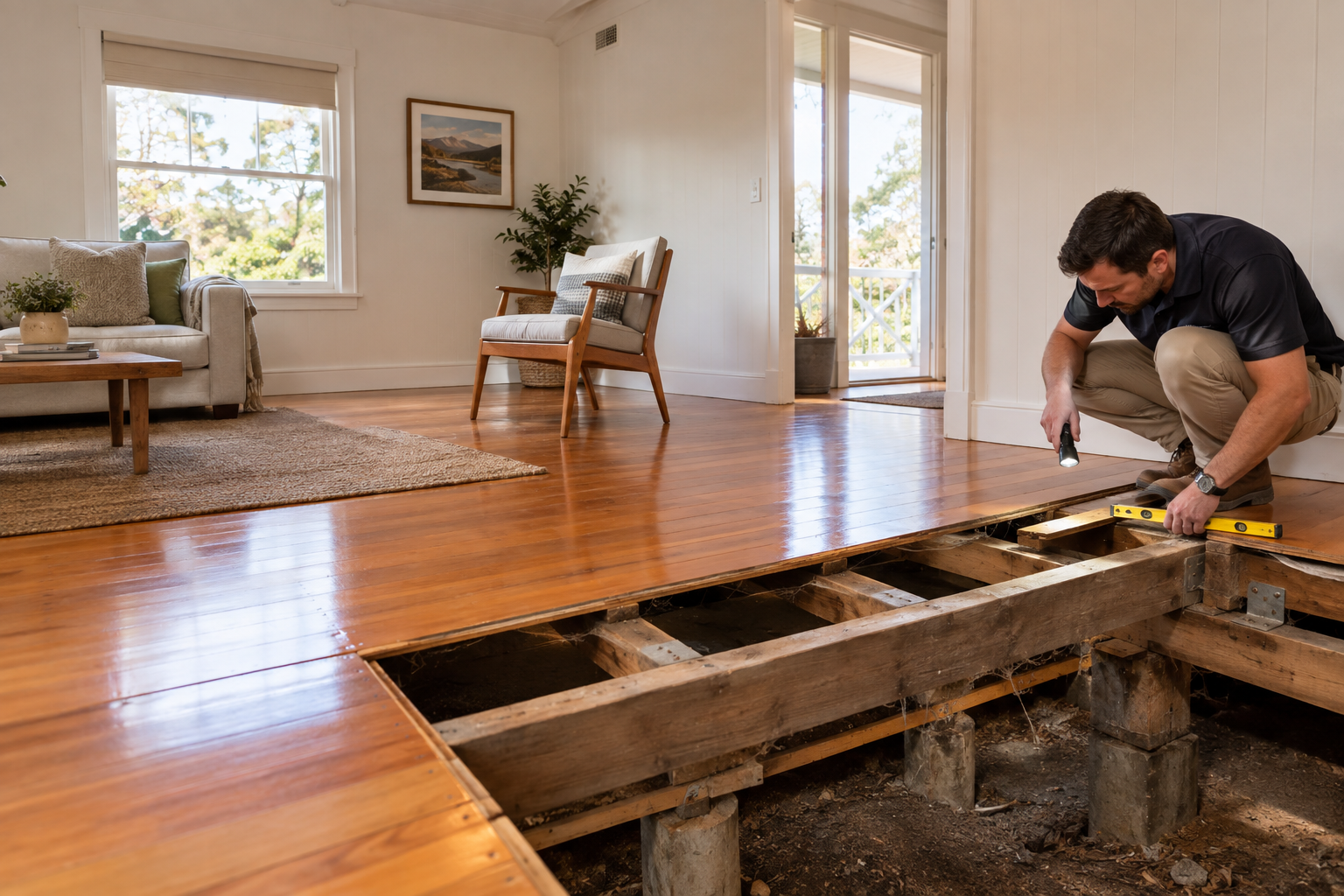
Bouncy floors without wall cracks can still indicate foundation or sub-floor issues. Learn the causes, warning signs and when to consider house levelling in Sydney.

Seeing cracked tiles after renovation? Learn how foundation movement, uneven floors and structural issues can cause new tiles to crack and when Sydney homeowners should consider a professional foundation assessment.
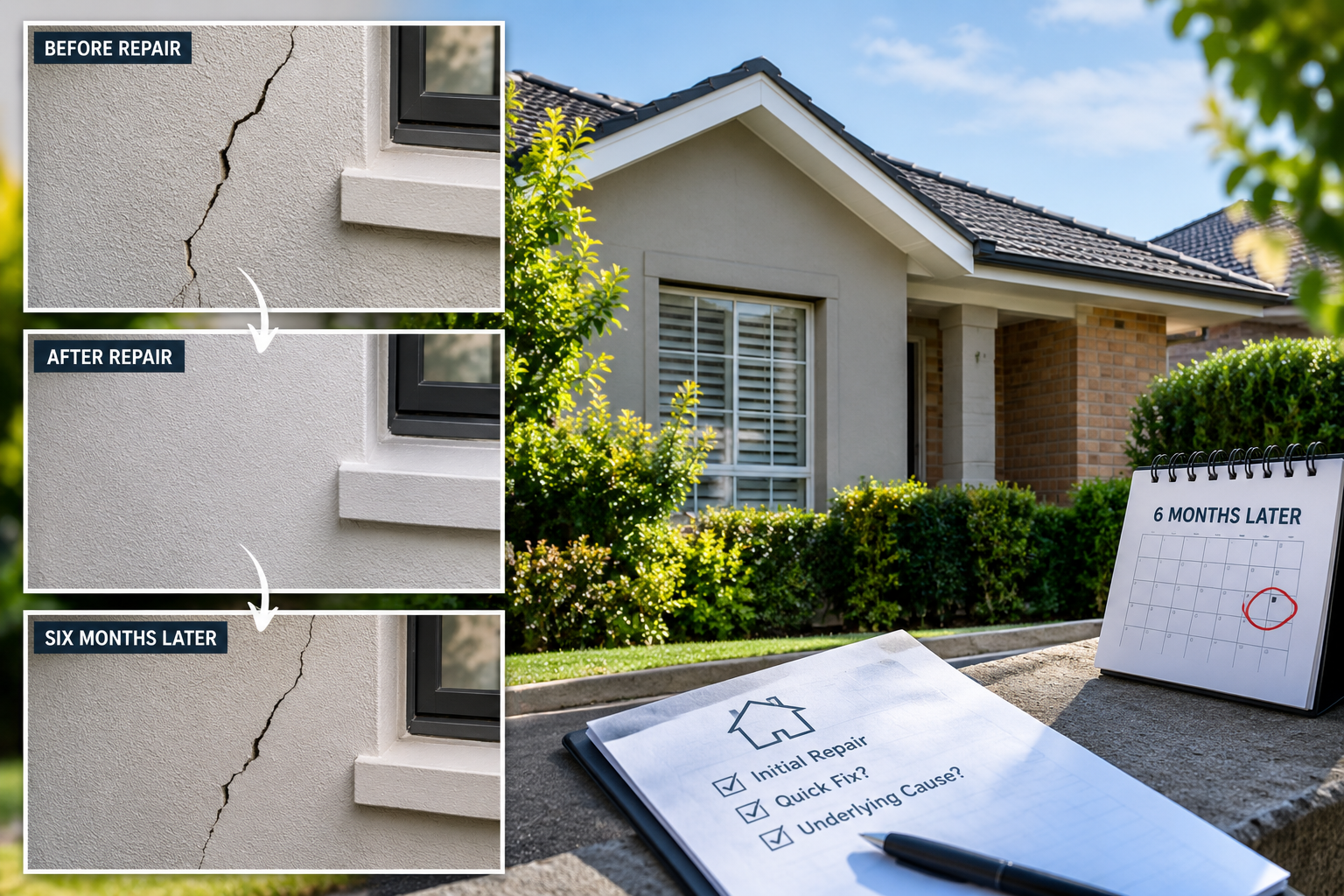
Blog Overview A recurring wall crack may be more than a cosmetic issue. If a crack returns, the underlying movement may still be active. Soil movement, ageing foundations, and drainage issues can contribute to cracking. Repeatedly patching cracks may only hide the visible symptom. Professional assessment can help identify potential foundation problems. Sydney House Levelling focuses on identifying the cause before recommending house levelling or foundation repair. Introduction: When a Repaired Crack Comes Back You repair, sand, and repaint a wall crack, and everything looks perfect, until the same crack returns months later. A recurring crack should not always be treated as a cosmetic issue. While some cracking can result from normal building movement, seasonal changes or material expansion, repeated cracks may indicate an underlying problem, particularly when accompanied by uneven floors, sticking doors or gaps around frames. This is where professional assessment becomes important. At Sydney House Levelling , the focus is on identifying why a property is moving rather than simply covering the evidence. The company provides detailed assessments and practical solutions, including house re-levelling, underpinning, sub-floor works and foundation assessments Sydney homeowners can rely on. What Does a Recurring Crack Actually Tell You? The biggest clue is simple: something may still be moving. If a repaired crack reappears in the same area, the underlying movement may not have stopped. Wall materials such as plasterboard, render or brickwork can crack again when the structure continues to experience stress. This is where foundation movement Sydney homeowners experience becomes important. Changing soil conditions, drainage, moisture variation and ageing structural components can all contribute to movement. A Cosmetic Repair May Only Treat the Symptom Filling a crack can improve its appearance, but it may not address why it formed. If movement continues, the crack can simply return. That is why foundation repair Sydney should begin with identifying the cause rather than treating only what is visible. A professional foundation assessment Sydney can help determine whether the issue is isolated or linked to wider movement. Why Foundation Movement Can Cause Cracks Your home's foundation supports the structure above it. When different sections move unevenly, stress can transfer through walls, floors, ceilings and frames. This structural movement Sydney homeowners experience may appear through multiple symptoms, such as recurring cracks, sticking doors, uneven floors or gaps around skirting boards. Common causes of foundation problems Sydney homeowners may encounter include changing soil conditions, poor drainage, ageing stumps, localised settlement, moisture variation and deteriorating structural supports. Because every property is different, identifying the actual cause is essential. A professional foundation inspection Sydney can provide a clearer understanding of whether visible cracking is linked to wider foundation movement. Recurring Wall Cracks Sydney Homeowners Should Not Ignore Not every crack requires structural intervention. However, recurring wall cracks Sydney homeowners notice deserve closer attention when they repeatedly appear, widen, or occur alongside other changes. Pay particular attention when cracks: Return after being repaired Become progressively wider Extend diagonally from corners of doors or windows Appear alongside gaps or separations Occur in multiple rooms Are accompanied by uneven floors Coincide with sticking doors or windows The pattern matters. For example, cracks in walls foundation problems can sometimes be associated with movement below the structure. Similarly, structural cracks in house Sydney properties may present differently depending on the building design, materials and source of movement. The important point is not to diagnose the cause from the crack alone. Instead, recurring cracking should prompt a broader inspection. Cracks in Walls, Uneven Floors and Sticking Doors: Look at the Bigger Picture Homeowners should avoid viewing structural symptoms in isolation. A wall crack, uneven floor or sticking door may seem minor individually, but several appearing together can indicate a need for professional investigation. Uneven Floors Can Be a Valuable Warning Sign If floors begin to slope, dip or feel uneven, the issue may not be the flooring itself. Uneven floors foundation problems can occur when support beneath the home shifts or deteriorates. If uneven floors appear alongside recurring cracks, a professional assessment is recommended. Doors and Windows Can Reveal Movement Doors or windows that suddenly stick, rub or stop closing properly may indicate building movement. While this does not automatically confirm a foundation defect, these changes alongside recurring wall cracks Sydney homeowners notice can justify a broader structural assessment. Why Repeated Patching Can Become a False Economy It is understandable why homeowners patch a crack first. It is quick, familiar and often inexpensive. The problem begins when the same process is repeated without investigating the cause. Suppose a crack returns after six months. You repair it again. It returns. You repaint. Then another crack appears nearby. At that point, the cumulative cost of cosmetic work may start to exceed the value of investigating the underlying issue. More importantly, repeated patching can delay appropriate House foundation repair Sydney homeowners may eventually require. A professional foundation inspection Sydney can establish whether there is evidence of movement and whether further investigation is appropriate. When Should You Consider Foundation Assessment? Not every crack requires immediate concern, but recurring or worsening symptoms deserve attention. Consider a foundation assessment Sydney service if cracks keep returning or widening, new cracks appear, floors become uneven, doors or windows stick, gaps develop around skirting or cornices, or movement is noticed across different areas of the home. An assessment is also valuable before a major renovation or property purchase. Sydney House Levelling examines visible damage, floor levels, sub-floor conditions and other potential causes of movement, providing practical recommendations based on the property's condition rather than guesswork. What Happens During a Foundation Inspection? A professional foundation inspection Sydney homeowners arrange should look beyond the visible crack. It may assess walls, floors, doors, windows, sub-floor components, drainage, and other signs of movement. The goal is to determine whether the damage is isolated or linked to wider foundation movement Sydney homeowners may need to address. Different causes require different solutions. While a minor cosmetic crack may only need monitoring, more significant movement could require house levelling Sydney, underpinning Sydney, sub-floor repairs or another suitable structural solution. Could House Re-Levelling Be the Right Solution? If a property has experienced uneven settlement or movement, house re-levelling Sydney services may be considered where appropriate. The purpose of re-levelling is not simply to make a floor look straight. The correct approach involves addressing the support conditions responsible for the movement and restoring stability as far as technically appropriate. At Sydney House Levelling, house re-levelling services are tailored to the cause of movement, with solutions potentially involving replacement of failing stumps or other structural support work. This is why homeowners should avoid choosing a repair method based purely on a photograph of a crack. When Might Underpinning Be Required? Underpinning Sydney homeowners consider is generally associated with strengthening or extending foundation support where existing foundations are no longer providing adequate stability. However, underpinning is not automatically the answer to every crack. The correct solution depends on the property's construction, soil conditions, extent of movement and underlying cause. A professional assessment should therefore come before committing to underpinning Sydney or any major structural repair. In some situations, house levelling may be appropriate. In others, sub-floor work, stump replacement, drainage improvements or another targeted intervention may make more sense. The objective should always be the same: address the underlying cause and create a durable solution. What Happens If You Ignore Recurring Cracks? The biggest risk is not that a crack will necessarily become catastrophic. The bigger concern is that continued movement can gradually create additional problems. Persistent structural movement Sydney homes experience may contribute to further cracking, uneven floors, misaligned doors and windows, deteriorating finishes, and increasing repair complexity. That is why early investigation can be commercially sensible. If cracks in walls foundation problems are identified early, homeowners have more opportunity to understand their options before the situation becomes more disruptive. Similarly, identifying structural cracks in house Sydney properties early can help homeowners make informed decisions about monitoring, maintenance, or structural intervention. The Key Lesson: Repair the Cause, Not Just the Crack If a crack comes back six months after being repaired, do not automatically assume the previous repair was poor. The more important question is: why did the crack return? If movement remains active, a surface repair cannot be expected to permanently solve the problem. This is the central lesson behind effective foundation repair Sydney work. The objective is not simply to make the visible damage disappear. It is to understand what is happening beneath and around the structure. For homeowners, that means moving from “How do I fill this crack?” to “What is causing this crack to keep coming back?” That change in mindset can prevent unnecessary cosmetic repairs and help identify genuine foundation problems Sydney properties may be experiencing. Frequently Asked Questions 1. Why do wall cracks keep coming back? Recurring cracks may indicate that the movement causing them has not been resolved. A professional foundation inspection Sydney can help identify the underlying cause. 2. Are recurring cracks always a foundation problem? Not always. However, recurring wall cracks Sydney homeowners notice alongside uneven floors or sticking doors should be professionally assessed. 3. What are signs of foundation movement? Common signs include recurring cracks, uneven floors, sticking doors and windows, and gaps around frames or skirting. 4. When should I arrange a foundation assessment? If cracks return, widen or appear in multiple areas, a foundation assessment Sydney can help determine whether further action is needed. 5. Is house levelling the same as underpinning? No. House levelling Sydney and underpinning Sydney are different solutions used for different structural conditions. The appropriate option depends on the cause of movement. 6. Can uneven floors indicate foundation problems? Yes. Uneven floors and foundation problems can sometimes be connected, particularly when combined with recurring cracks or other signs of movement. 7. Can foundation repair stop cracks from returning? Effective House foundation repair Sydney focuses on addressing the underlying cause of movement rather than simply repairing the visible crack. Final Thoughts: If the Crack Came Back, It Is Time to Look Deeper A crack that returns after six months should not simply be patched again. It may indicate ongoing movement beneath the surface. While recurring cracks do not always mean serious structural problems, they should be investigated when combined with uneven floors, sticking doors or other warning signs. Whether the solution involves monitoring, house re-levelling Sydney, underpinning Sydney, sub-floor repairs or foundation repair Sydney, accurate diagnosis should come first. Sydney House Levelling provides professional foundation assessments and structural repair services across Sydney, helping homeowners understand the cause of movement and choose practical solutions. Don’t Just Repair the Crack. Find Out Why It Came Back. If recurring cracks or uneven floors concern you, contact Sydney House Levelling for a professional assessment and take action before the problem becomes more complex.

Thinking about an AI property inspection? Discover its benefits, limitations and hidden risks, and why expert foundation assessment still matters for Sydney homes.
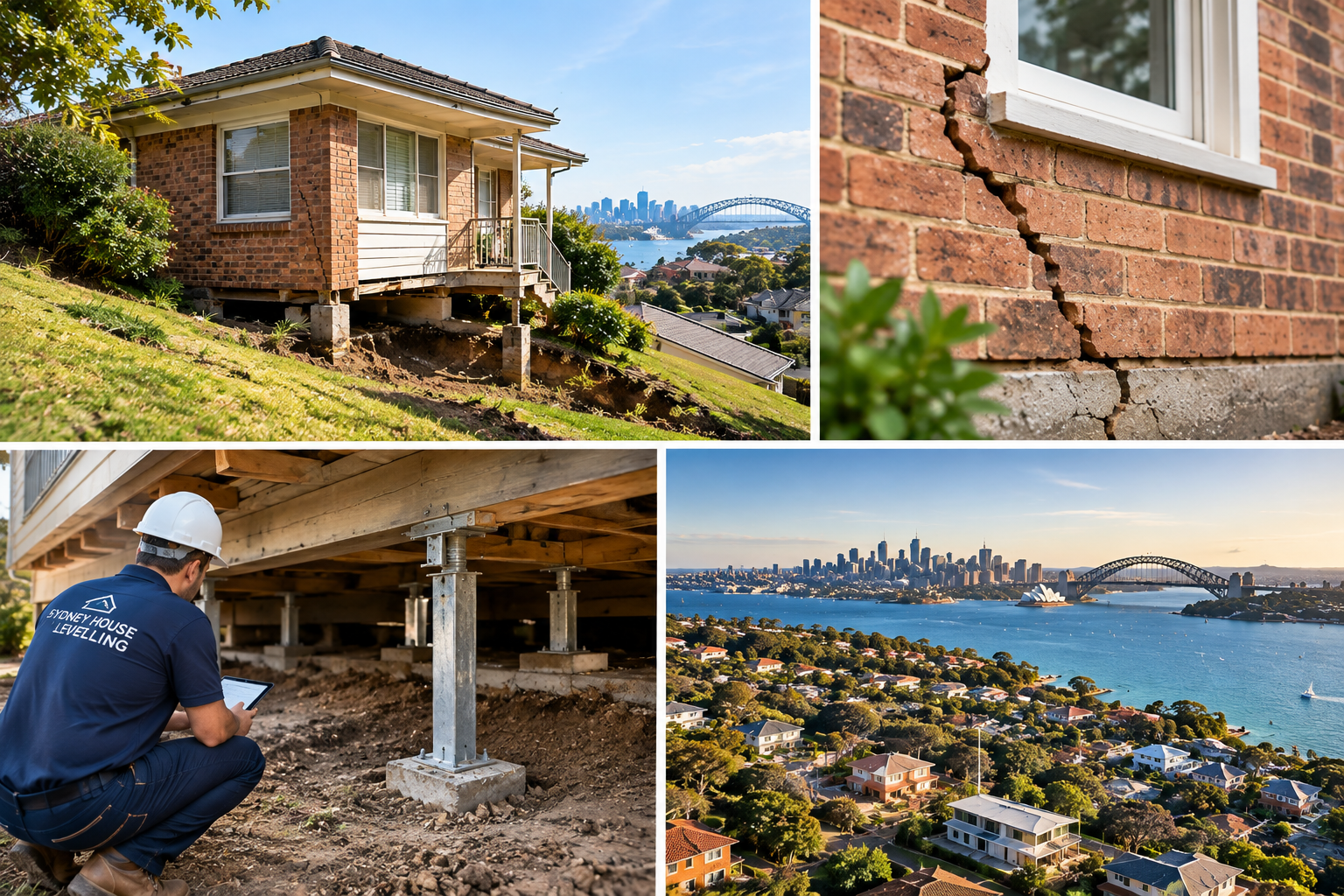
Discover which Sydney suburbs are most prone to foundation movement, what causes structural issues, and how professional underpinning and house levelling can protect your property. Learn from Sydney House Levelling.

Drought followed by heavy rain can trigger soil movement, foundation damage and house cracks in Sydney. Learn the warning signs and repair options with Sydney House Levelling.
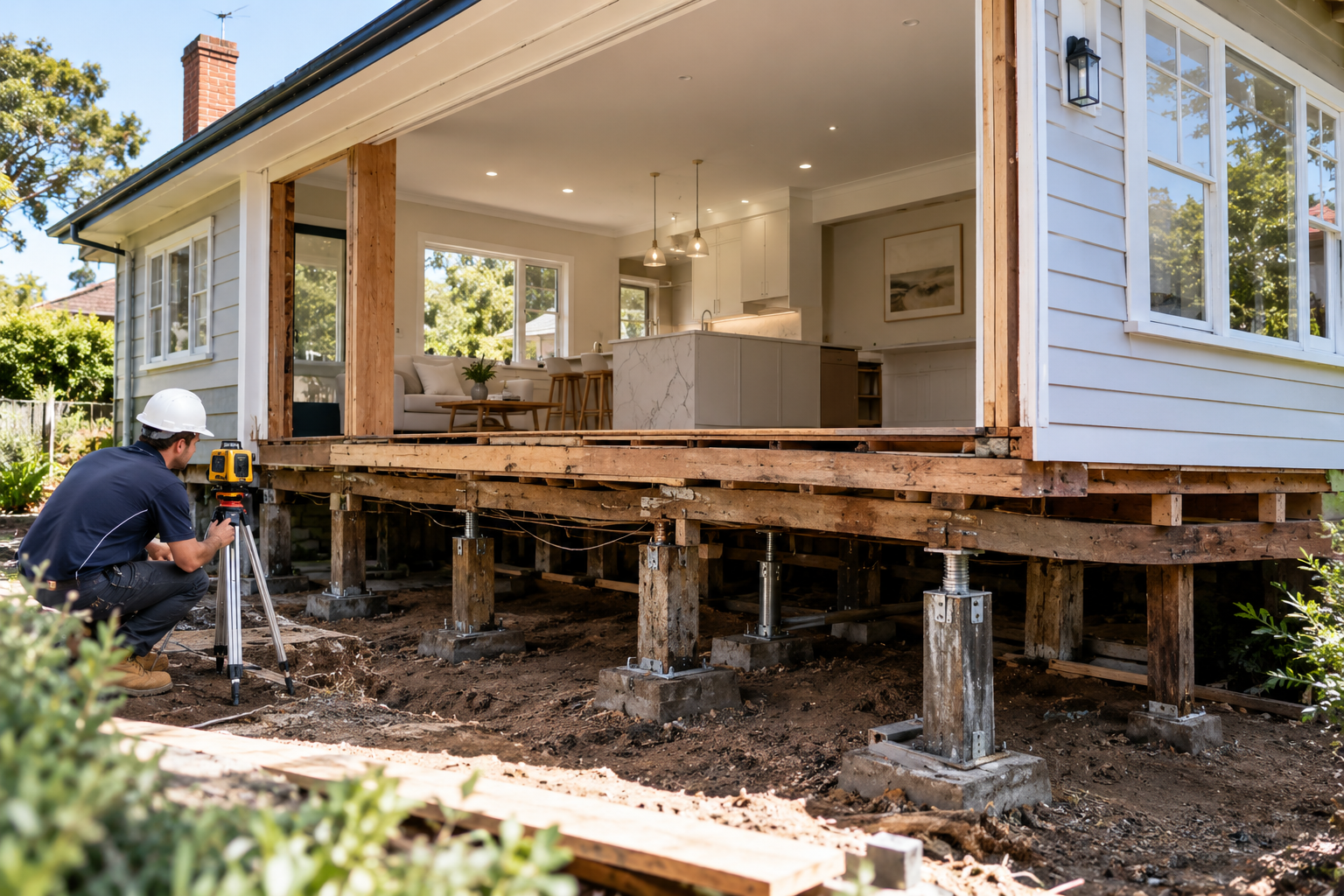
Planning a home renovation in Sydney? Discover why resolving a moving foundation must come first, the risks of rushing, and how professional underpinning protects your investment.
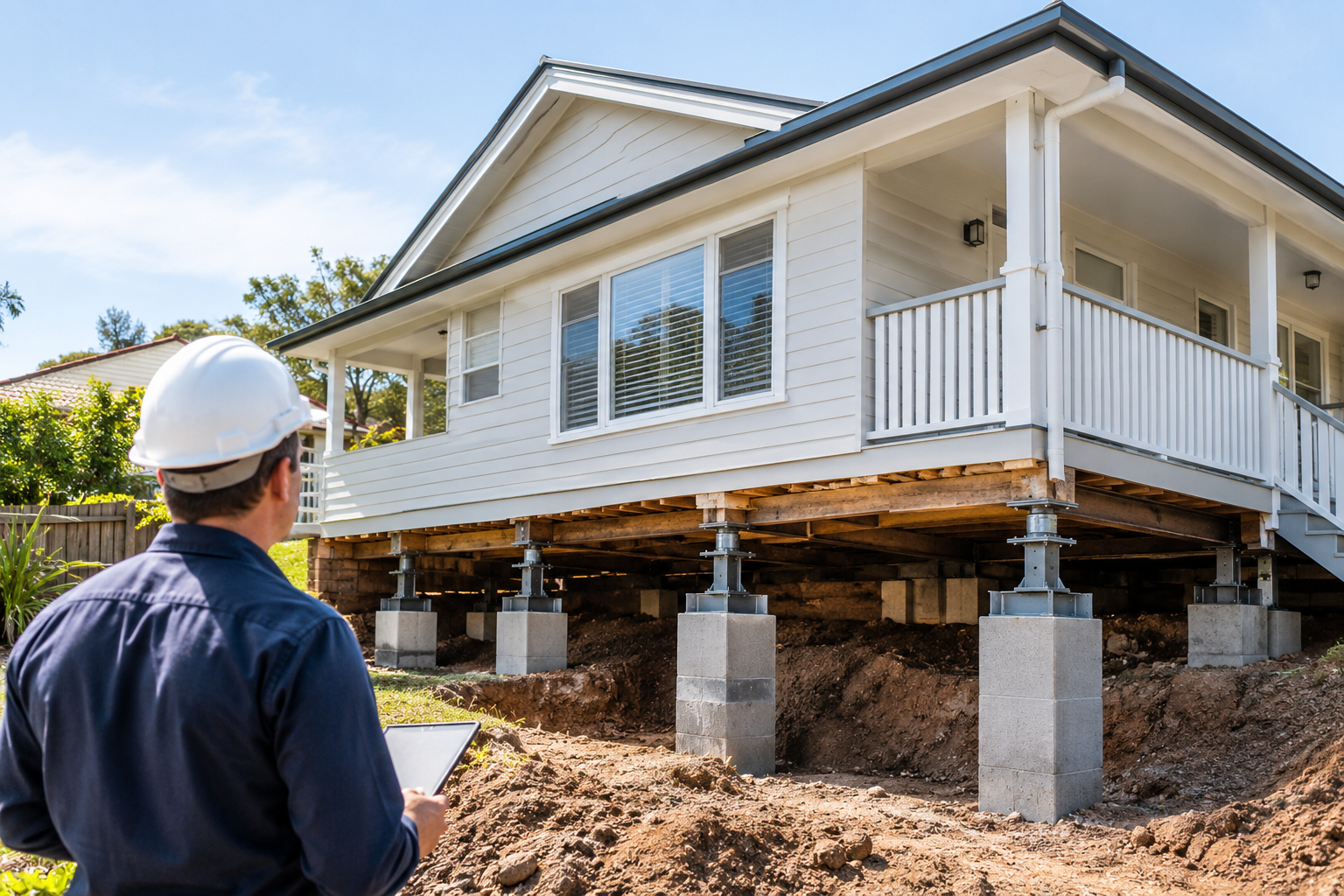
Think you need whole-house underpinning? Learn how foundation movement, soil conditions, and structural damage determine whether you need targeted underpinning or foundation repair in Sydney.
Introduction Your Sydney home is one of your most valuable investments but what if its foundation is silently shifting beneath your feet? Many homeowners notice minor issues such as sloping floors in Sydney homes, doors that stick, or small cracks appearing on walls, but often dismiss them as cosmetic. Unfortunately, these signs are often early indicators of foundation movement, a problem that can escalate into costly structural repairs if ignored. The hidden cost of ignoring foundation issues is staggering. Homeowners in Sydney may face repairs running into tens of thousands of dollars, property devaluation, and even safety hazards. That’s why early intervention through house levelling and underpinning is crucial. With proactive assessment and treatment, you can maintain the integrity of your home, enhance its resale value, and avoid emergency repair bills. In this article, we’ll explore the causes of foundation movement in Sydney homes, highlight the critical early warning signs, and explain why investing in house levelling Sydney and underpinning Sydney solutions from experienced professionals like Sydney House Levelling is a smart move. Whether you’re renovating, selling, or simply maintaining your property, this guide will help you make informed decisions that protect your home and your wallet. Blog Overview Learn why ignoring foundation movement in Sydney homes can lead to massive costs. Discover the early warning signs of structural issues like uneven floors, sticking doors, and wall cracks. Understand how house levelling , underpinning , and foundation assessment prevent long-term damage. Real-life insights: case study from a Sydney homeowner who delayed levelling. Practical advice on costs, timelines, and choosing a licensed house levelling builder in Sydney. Clear action steps: how to schedule a free foundation assessment Sydney and protect your investment. Why Foundations Move in Sydney Homes Sydney’s unique geology plays a significant role in foundation issues. Many homes are built on reactive clay soils, which expand when wet and contract during dry periods. Over time, this can lead to subsidence and uneven floors Sydney homeowners often notice. Other common causes include: Poor drainage systems that allow water to pool near foundations. Tree roots absorbing soil moisture unevenly, causing shifting. Ageing timber stumps in older homes that weaken under pressure. Nearby construction or heavy traffic, which can subtly affect soil stability. Understanding these causes helps homeowners identify the early warning signs and act before minor issues become major structural problems. Early Warning Signs of Foundation Movement Recognising foundation movement early is critical. Here are key signs Sydney homeowners should watch for: Uneven or Sloping Floors Floors that slope, dip, or appear uneven are one of the most common indicators. Test by rolling a ball or using a spirit level to detect slanting surfaces. Sticking Doors & Windows Doors and windows that stick or don’t close properly may indicate shifting frames. Cracks in Walls & Ceilings Vertical or diagonal cracks near corners or above windows often suggest foundation movement Sydney. Pay extra attention to cracks in walls foundation movement Sydney. Gaps Around Skirting or Cornices Expanding gaps indicate subfloor or foundation shifts. Ignoring these signs may lead to structural repair Sydney homes, which is significantly more expensive than early house re-levelling Sydney. The True Cost of Waiting Many homeowners delay action, thinking foundation movement is minor. Unfortunately, postponement can result in: Escalating repair costs : Early foundation assessment Sydney can cost a few hundred dollars; waiting can mean foundation repair cost Sydney vs early intervention jumps into tens of thousands. Safety hazards : Weakening foundations risk ceiling collapses, wall failures, or door/window misalignment. Property devaluation : Homes with visible cracks or uneven floors are harder to sell. Increased insurance complications : Some insurers may reduce coverage or reject claims if issues are ignored. Proactive intervention like house levelling Sydney or underpinning Sydney provides peace of mind and long-term savings. House Levelling & Underpinning Solutions in Sydney Professional house levelling and underpinning are designed to stabilise your property: House Levelling Corrects sloping floors in Sydney homes using hydraulic jacks or piers. Restores the home’s original alignment and prevents further movement. Underpinning Reinforces foundations by installing additional supports beneath the structure. Ideal for subsidence repair Sydney or homes with significant foundation movement. Sydney House Levelling specialises in: Licensed, insured, and experienced builders. Subfloor works, ventilation, and damp prevention for Sydney homes. Free foundation assessment Sydney, ensuring accurate diagnosis before starting repairs. Real-Life Case Study A homeowner in Castle Hill noticed sloping floors and small cracks in her living room walls. Initially, she ignored them. Within a year, she faced major structural repair Sydney homes, costing over $35,000. After contacting Sydney House Levelling, we performed a thorough foundation assessment Sydney, followed by underpinning and house re-levelling before renovation Sydney. The home was restored to stability, avoiding further damage and safeguarding her property value. This example highlights the importance of acting early and trusting licensed house levelling builders Sydney. How to Protect Your Sydney Home Schedule a free foundation assessment Sydney with reputable professionals. Monitor for early warning signs like doors sticking house shifting Sydney or cracks in walls foundation movement Sydney. Don’t delay levelling or underpinning cheap house levelling Sydney cost is often far lower than emergency repairs. Consider subfloor works, ventilation, and damp solutions Sydney homes to prevent future issues. Maintain proper drainage and soil moisture around your home. Conclusion Ignoring foundation movement in Sydney homes can be a costly mistake. From sloping floors and sticking doors to major structural failures, the hidden costs quickly escalate. Early action through house levelling Sydney and underpinning Sydney not only preserves your home’s integrity but also saves thousands in future repairs. With the expertise of Sydney House Levelling, homeowners can confidently address foundation issues Sydney, perform subsidence repair Sydney, and prevent long-term structural damage. A free foundation assessment Sydney is the first step toward protecting your home, ensuring safety, and maintaining property value. Don’t wait for cracks to widen or floors to tilt act today. Schedule a consultation, share this guide with fellow homeowners, or subscribe for expert advice. Your home deserves proactive care, and with Sydney House Levelling, you can secure peace of mind and long-term savings.
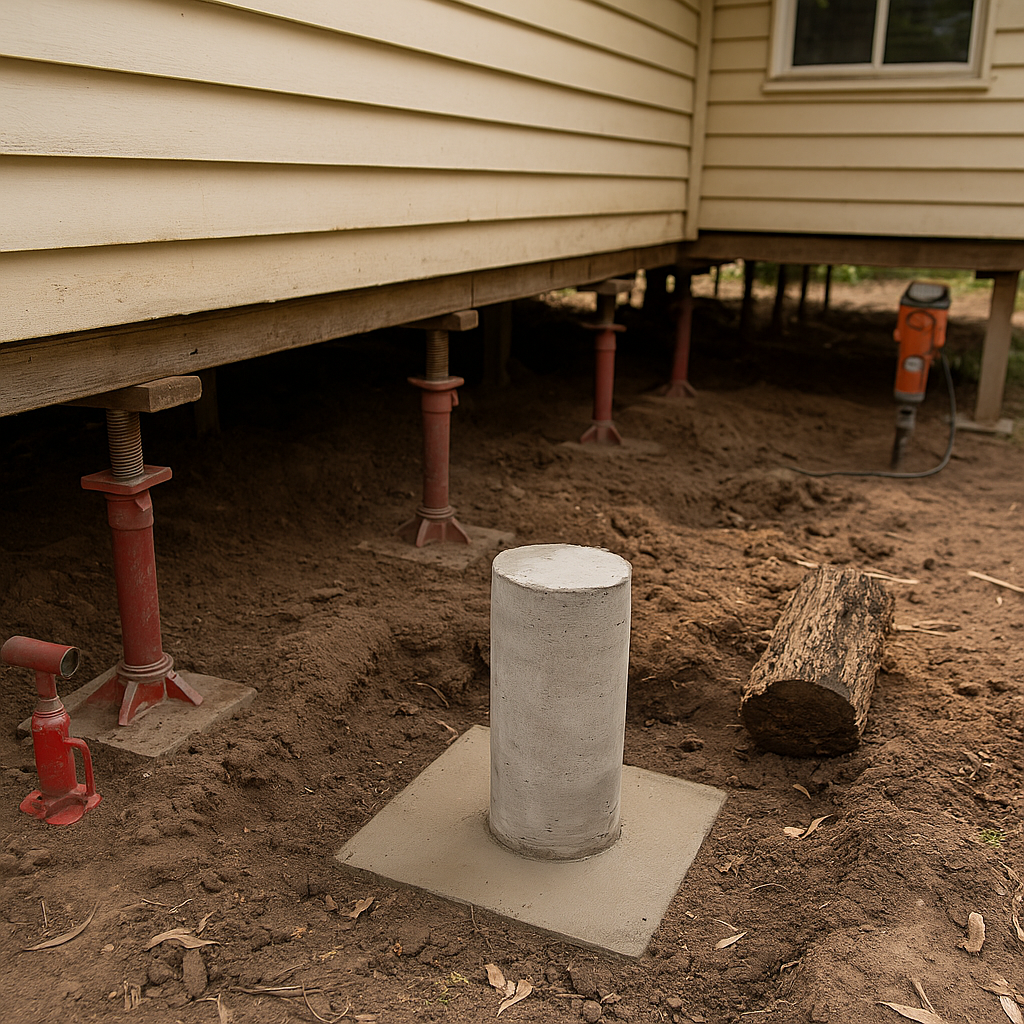
Protect your Sydney home from costly foundation damage. Learn early warning signs & why house levelling & underpinning saves thousands.