
How to Know If Floor Movement Is Just Settling or Structural

October 14, 2025
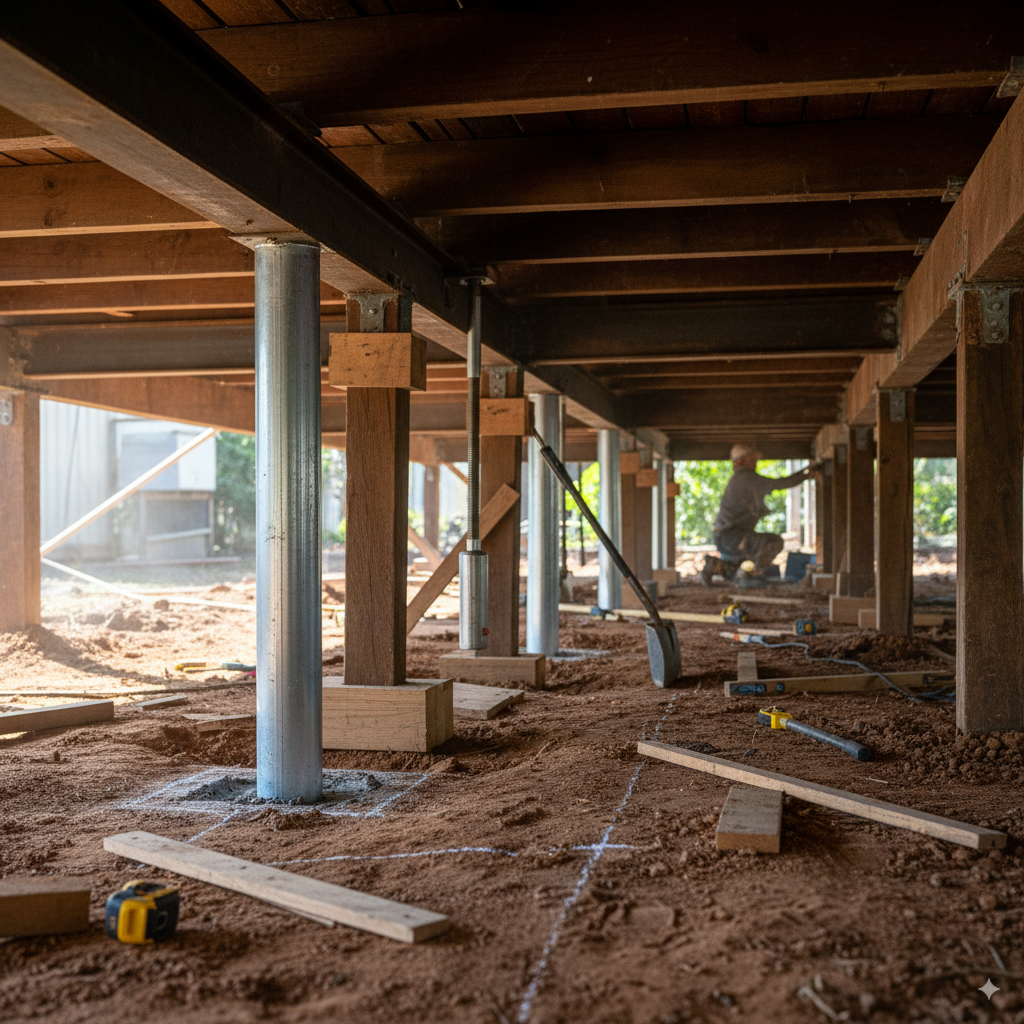
Raised building under construction with steel columns, exposed beams, and workers in the background

It’s common for Sydney homes, especially older ones, to experience some degree of floor movement over time. But how do you tell the difference between harmless settling and a serious structural issue that needs immediate attention?


Knowing the signs early can help you avoid major repairs and keep your home safe and stable. Here’s what to look for.


Understanding Normal Settling
Most homes experience minor settling within the first few years after construction. This happens as the soil beneath your home naturally compresses and the structure adjusts to its load.
In these cases, you might notice:

  • Small hairline cracks in walls or floors
  • Slight unevenness in certain areas
  • Minor creaks or squeaks in the flooring

These issues are usually cosmetic and don’t necessarily point to foundation failure. However, if the movement continues or worsens, it’s time to take a closer look.


Signs the Floor Movement Is Structural
If your floor feels uneven, bouncy, or noticeably sloped, it may be more than natural settling. Structural movement occurs when parts of the foundation shift, sink, or lift due to soil instability, poor drainage, or moisture issues.


Common signs of structural floor movement include:

  • Floors sloping noticeably in one direction
  • Cracks appearing in tiles, floorboards, or concrete slabs
  • Doors or windows that suddenly stick or won’t close properly
  • Gaps between walls, ceilings, or skirting boards
  • Visible separation in external brickwork or retaining walls

If these symptoms are present, the foundation may be compromised and require professional assessment.


Why Structural Issues Occur
In Sydney, many homes are built on reactive clay soils that expand and contract with moisture changes. Periods of heavy rain or drought can cause uneven soil movement beneath your foundation, leading to sinking or heaving. Poor drainage, plumbing leaks, or nearby tree roots can also contribute to the problem.


How to Confirm the Cause
The best way to determine whether your floor movement is due to simple settling or a structural problem is to have a professional inspection. A qualified foundation specialist can assess the extent of the movement, identify the cause, and recommend the appropriate repair method — such as re-levelling, underpinning, or improving drainage.


What You Can Do in the Meantime

  • Monitor any cracks or uneven areas over time
  • Keep gutters and drainage systems clear
  • Avoid overwatering garden areas close to your home’s foundation
  • Document changes with photos to track progression

If the issues worsen, don’t delay getting expert advice.


Why Homeowners Trust Sydney House Levelling
At Sydney House Levelling, we specialise in diagnosing and repairing all types of foundation and floor movement issues. Our experienced team uses modern levelling and underpinning techniques to restore your home’s stability and prevent further damage.

We provide:
✅ Comprehensive foundation inspections
✅ Tailored levelling and repair solutions
✅ Honest advice and transparent pricing


Book an Inspection Today
If you’ve noticed floor movement and aren’t sure whether it’s just settling or something more serious, contact Sydney House Levelling today. Our team will provide a thorough assessment and peace of mind knowing your home is safe and secure.


📞 Call us now or book a free inspection online.

Illustrative Sydney homeowner noticing an uneven or sloping floor
By Joshua Reti • October 21, 2026
Uneven floors do not always require an engineer. Learn when to start with a foundation assessment and when a Sydney home needs structural advice.
Illustrative Sydney homeowner noticing an uneven or sloping floor
By Joshua Reti • October 19, 2026
Learn when a sloping floor may be normal, what building tolerances mean, how to measure change and when a Sydney home needs a foundation assessment.
Illustrative Sydney house inspection concept showing areas checked for movement
By Joshua Reti • October 16, 2026
Door suddenly sticking? Learn how humidity, hinges and foundation movement differ, what to check and when Sydney homeowners should arrange an assessment.

By Joshua Reti • October 11, 2026
Damp underfloor space despite wall vents? Learn how airflow, leaks, drainage and ground moisture interact, and what Sydney homeowners should check first.
Sydney home exterior and foundation inspection illustration
By Joshua Reti • October 11, 2026
Learn how nearby trees may affect Sydney home foundations, what else can cause movement, and what to check before cutting roots or removing a tree.
Illustration of water beneath a raised home
By Joshua Reti • October 6, 2026
Should drainage repairs happen before house levelling? Learn how Sydney homeowners can assess water problems, plan repairs and avoid treating symptoms alone.
General home exterior and crack inspection illustration
By Joshua Reti • October 6, 2026
Sloping floors or recurring cracks in a Newtown terrace? Learn what to check, how assessments guide repairs, and what heritage and access mean for planning.
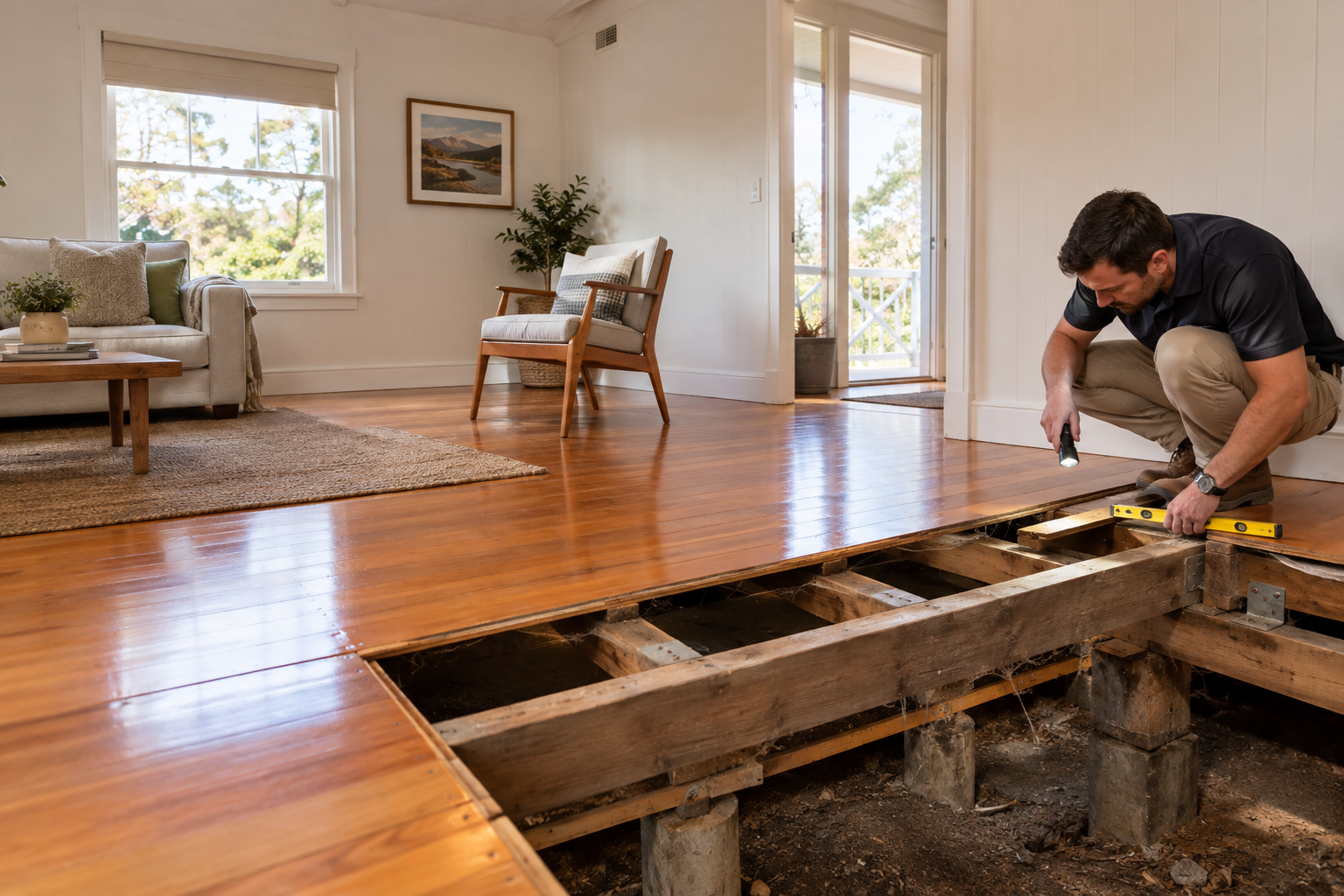
Worker inspecting a damaged hardwood floor with a large hole in a bright living room
By Joshua Reti • September 21, 2026
Bouncy floors without wall cracks can still indicate foundation or sub-floor issues. Learn the causes, warning signs and when to consider house levelling in Sydney.
Floodwater beneath a raised house, with wooden support posts standing in shallow water.
By Joshua Reti • September 15, 2026
Discover how recurring water under your home can damage timber stumps, cause foundation movement and lead to costly repairs. Learn when to book a foundation inspection in Sydney.

Modern living room with glossy stone floor, sofa, dining area, and open view to a balcony
By Joshua Reti • September 7, 2026
Seeing cracked tiles after renovation? Learn how foundation movement, uneven floors and structural issues can cause new tiles to crack and when Sydney homeowners should consider a professional foundation assessment.
Show More