
Concrete vs. Steel Underpinning: What’s Best for Sydney Homes?

August 18, 2025

Concrete vs. Steel Underpinning: What’s Best for Sydney Homes?

When foundation issues strike, underpinning is often the best solution to stabilise and level your home. But which method should you choose—concrete underpinning or steel underpinning?

Both are effective, but the right choice depends on your home’s construction, soil type, and how severe the foundation movement is. Here’s a breakdown to help Sydney homeowners make an informed decision.


Concrete Underpinning: The Traditional Choice

What It Is

Concrete underpinning involves digging under your existing foundation and pouring concrete to create a deeper, stronger footing.


Pros

  • Proven and Reliable – A traditional method with decades of successful use.
  • Cost-Effective – Generally cheaper than steel underpinning for standard residential jobs.
  • Great for Large Areas – Ideal for homes with widespread foundation movement.

Cons

  • Slower Installation – Excavation and curing take time, so the process can take weeks.
  • Messy and Disruptive – Requires significant digging around your home.
  • Not Ideal for All Soils – Less effective in very loose or sandy soils.


Steel Underpinning: The Modern Alternative

What It Is

Steel underpinning uses screw piles or driven steel piers installed deep into stable soil or bedrock, then attached to the foundation to lift and support the home.


Pros

  • Faster Installation – Can be completed in days, not weeks.
  • Minimal Excavation – Less disruptive to gardens and landscaping.
  • Ideal for Problematic Soils – Works well in Sydney’s reactive clay and sloping blocks.
  • Immediate Load-Bearing – No waiting for concrete to cure.

Cons

  • Higher Cost – Steel is generally more expensive upfront.
  • Not Always Necessary – Overkill for minor subsidence issues.


Which Is Best for Sydney Homes?

Both methods work, but here’s a quick guide:

  • Choose Concrete Underpinning if…
    ✔ Your home has
    widespread subsidence or needs a large foundation area reinforced.
    ✔ You’re on a
    tighter budget and don’t mind a longer project timeline.


  • Choose Steel Underpinning if…
    ✔ You’re on
    reactive clay soil (common in Western Sydney).
    ✔ Your home is on a
    sloping block or needs deep stabilisation.
    ✔ You want a
    fast, less disruptive solution.


In many cases, engineers may recommend a combination of both methods, depending on your property’s unique conditions.


Need Expert Advice?

Choosing the wrong underpinning method can cost you more in the long run. If you’re noticing cracks, uneven floors, or doors sticking, it’s time to have your foundation professionally assessed.


Talk to Sydney’s House Leveling Experts

We’ll inspect your home, explain your options, and recommend whether concrete or steel underpinning is best for you.


📞 Call us today to book an inspection and get a tailored solution for your Sydney home.


Illustrative Sydney homeowner noticing an uneven or sloping floor
By Joshua Reti • October 21, 2026
Uneven floors do not always require an engineer. Learn when to start with a foundation assessment and when a Sydney home needs structural advice.
Illustrative Sydney homeowner noticing an uneven or sloping floor
By Joshua Reti • October 19, 2026
Learn when a sloping floor may be normal, what building tolerances mean, how to measure change and when a Sydney home needs a foundation assessment.
Illustrative Sydney house inspection concept showing areas checked for movement
By Joshua Reti • October 16, 2026
Door suddenly sticking? Learn how humidity, hinges and foundation movement differ, what to check and when Sydney homeowners should arrange an assessment.
By Joshua Reti • October 11, 2026
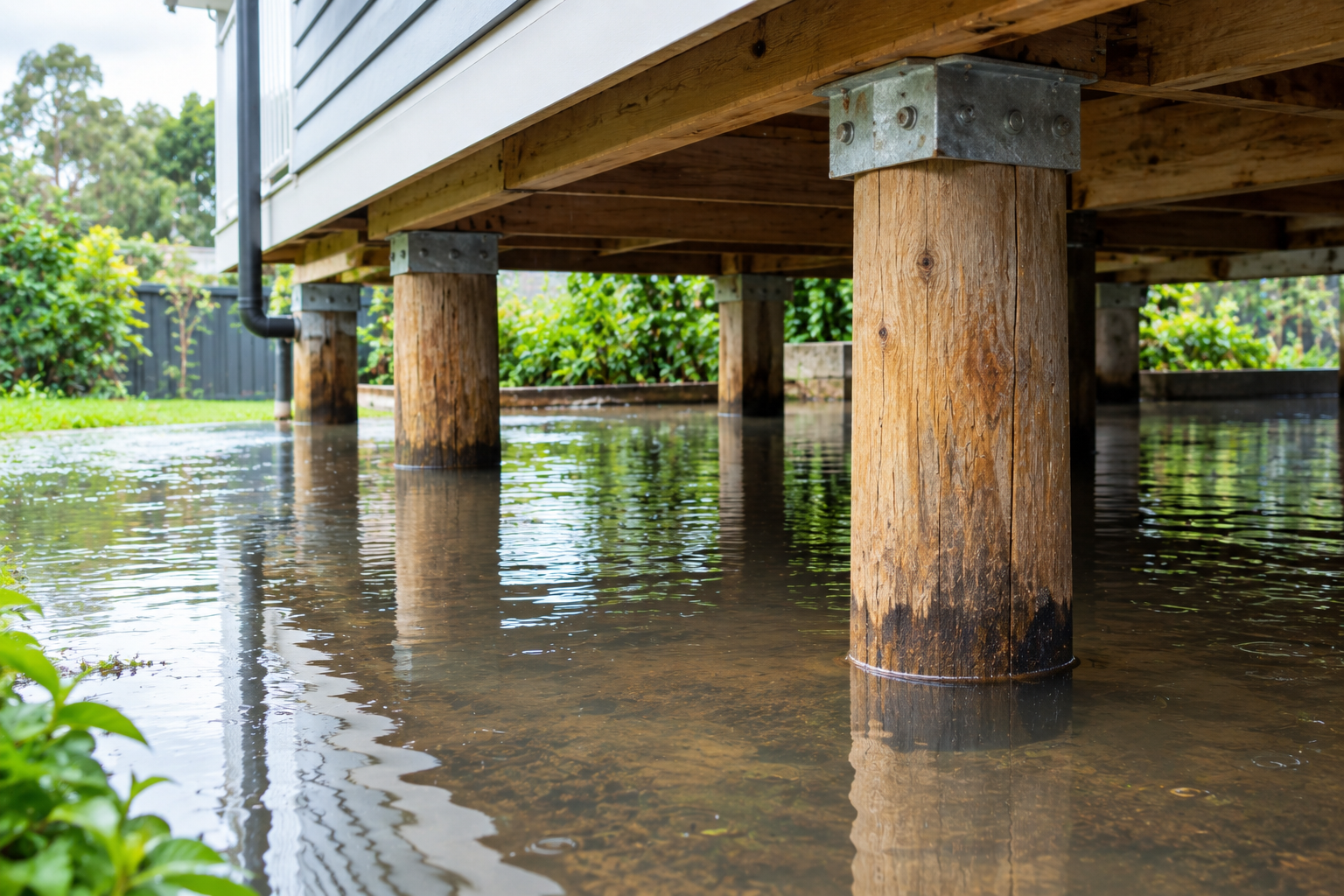
Damp underfloor space despite wall vents? Learn how airflow, leaks, drainage and ground moisture interact, and what Sydney homeowners should check first.
Sydney home exterior and foundation inspection illustration
By Joshua Reti • October 11, 2026
Learn how nearby trees may affect Sydney home foundations, what else can cause movement, and what to check before cutting roots or removing a tree.
Illustration of water beneath a raised home
By Joshua Reti • October 6, 2026
Should drainage repairs happen before house levelling? Learn how Sydney homeowners can assess water problems, plan repairs and avoid treating symptoms alone.
General home exterior and crack inspection illustration
By Joshua Reti • October 6, 2026
Sloping floors or recurring cracks in a Newtown terrace? Learn what to check, how assessments guide repairs, and what heritage and access mean for planning.
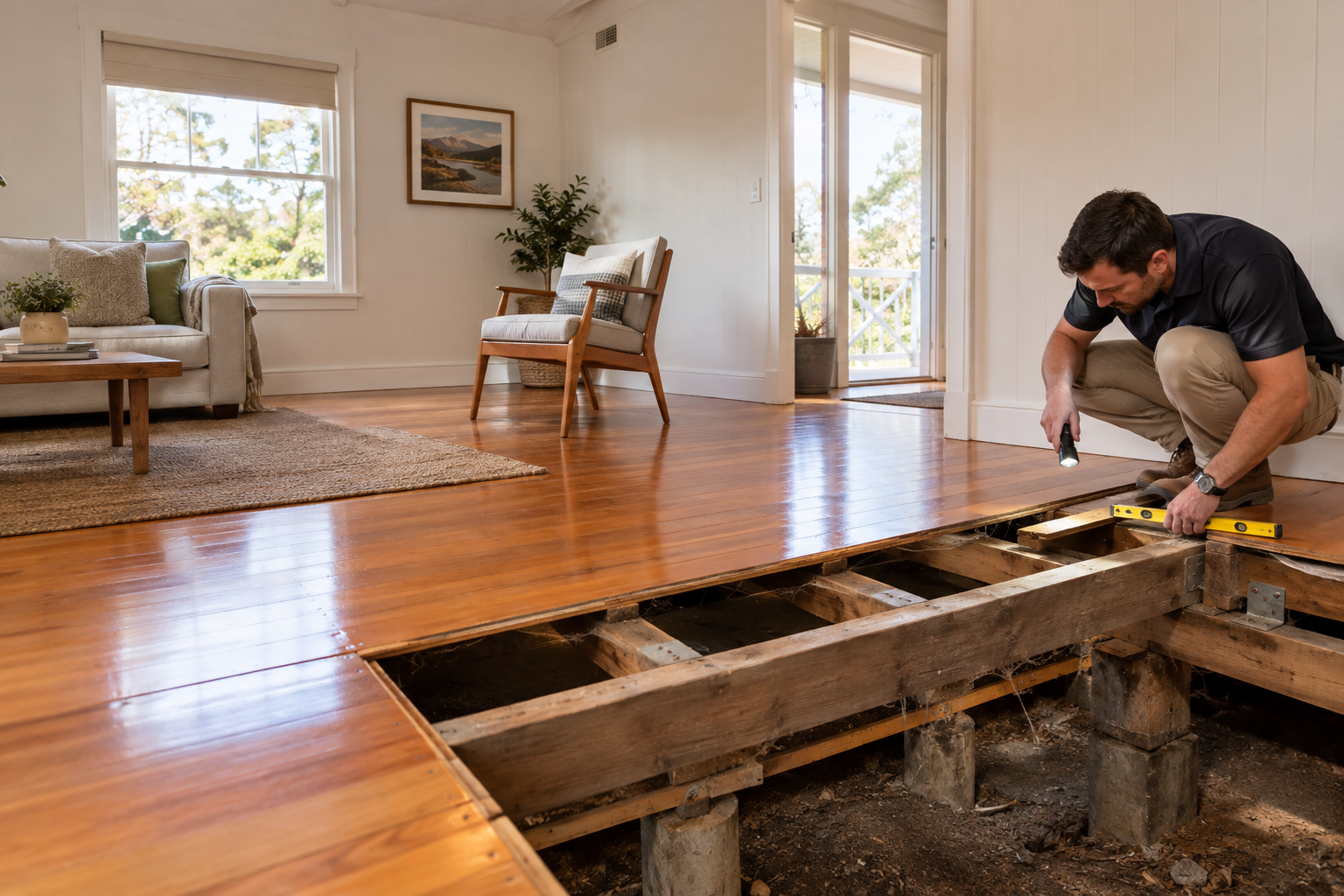
Worker inspecting a damaged hardwood floor with a large hole in a bright living room
By Joshua Reti • September 21, 2026
Bouncy floors without wall cracks can still indicate foundation or sub-floor issues. Learn the causes, warning signs and when to consider house levelling in Sydney.
Floodwater beneath a raised house, with wooden support posts standing in shallow water.
By Joshua Reti • September 15, 2026
Discover how recurring water under your home can damage timber stumps, cause foundation movement and lead to costly repairs. Learn when to book a foundation inspection in Sydney.

Modern living room with glossy stone floor, sofa, dining area, and open view to a balcony
By Joshua Reti • September 7, 2026
Seeing cracked tiles after renovation? Learn how foundation movement, uneven floors and structural issues can cause new tiles to crack and when Sydney homeowners should consider a professional foundation assessment.
Show More